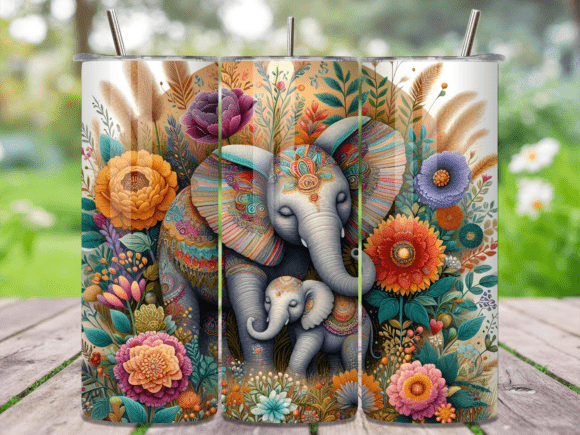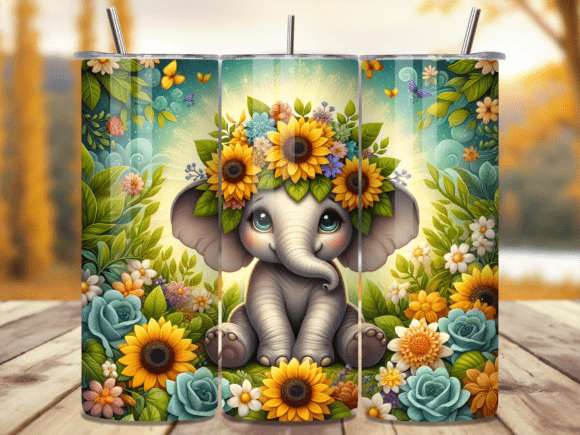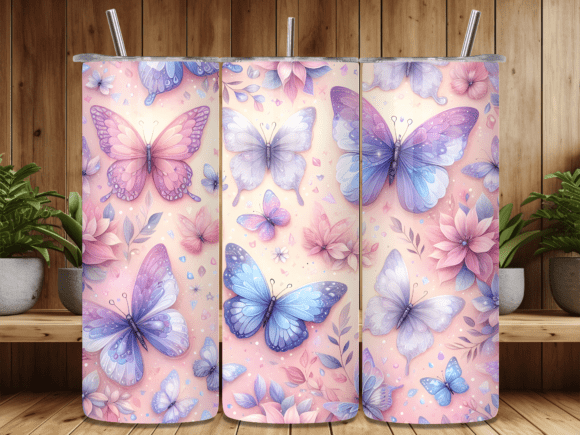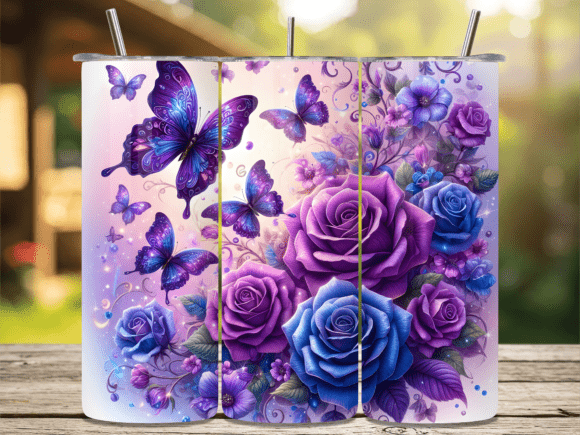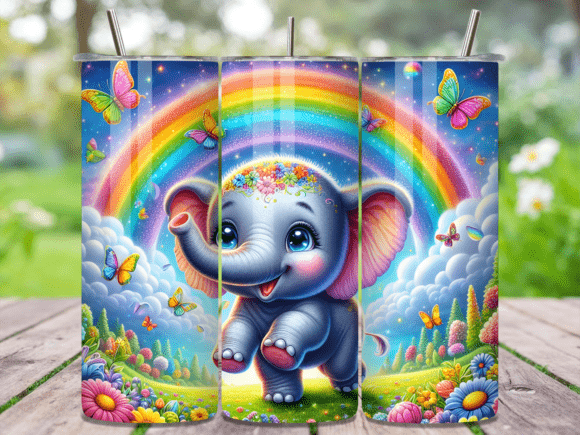
Rainbow Butterfly Baby Elephant Tumbler Wraps
As a brand designer who has spent years helping local businesses find their visual voice, I approach every new graphic design asset with a critical eye. Today, I am reviewing the Rainbow Butterfly Baby Elephant Tumbler, a vibrant illustration intended for use as a Tumbler Wrap. Before this asset hits any client project, I need to understand its potential beyond just being a pretty picture. Does it hold up under the scrutiny of professional branding? Can it elevate a small business from generic to memorable? Let's dive into how this specific design functions within the ecosystem of local business marketing and product packaging.
First Impressions: A Mood of Whimsy and Joy
The moment you open the file for the Rainbow Butterfly Baby Elephant Tumbler, the mood is immediately established. It is undeniably playful, soft, and full of life. The combination of a baby elephant—a symbol of gentle strength and memory—with rainbow butterflies creates a palette that screams innocence and celebration. This is not a design for a high-end corporate law firm or a minimalist luxury skincare line. Instead, it speaks directly to brands that want to feel approachable, friendly, and handmade.
For a small business branding project, this asset suggests a personality that is nurturing and fun. Imagine a boutique children’s clothing store, a daycare center launching a summer camp, or a bakery specializing in kid-friendly treats. The colors are saturated enough to grab attention on a crowded shelf but harmonious enough to avoid visual chaos. It feels organic and crafted, fitting perfectly into the aesthetic of a handmade business or a creative entrepreneur selling seasonal goods. If your brand identity relies on warmth and connection, this illustration provides an instant emotional hook.
Practical Applications in Real Business Scenarios
While the charm of the Rainbow Butterfly Baby Elephant Tumbler is obvious, its true value lies in versatility. In my recent work with a local coffee shop rebranding their kids' menu section, I found that such assets can transform standard items into collectibles. Here is how I envision utilizing this design asset across various touchpoints:
- Product Packaging and Labels: As a Tumbler Wrap, this is its primary function. It turns a generic stainless steel cup into a branded experience. However, scaling down the image allows it to work beautifully on product labels for honey jars, bath bombs, or candle tins.
- Promotional Materials: For a seasonal campaign, this illustration can serve as the hero graphic on flyers, posters, and price lists. The whimsical nature draws parents and families in immediately.
- Digital Presence: In the realm of social media graphics, this image works well as a story background or an Instagram post overlay. It breaks up text-heavy posts and adds a layer of polish to marketing visuals.
- Brand Identity Elements: While perhaps too detailed for a primary logo, elements of the butterfly or the elephant silhouette could be extracted for logo design accents, icons, or favicon creation.
- Printable Inserts: Inside a subscription box or a retail bag, a thank-you card featuring the Rainbow Butterfly Baby Elephant Tumbler design reinforces the brand message of care and joy.
Elevating Brand Presentation and Trust
One of the biggest challenges for creative entrepreneurs is standing out in a saturated market. Using a cohesive graphic design asset like this one helps build a stronger first impression. When a customer sees a custom-wrapped tumbler rather than a plain one, they perceive higher value. This leads to better product recognition and improved customer trust. Professional packaging signals that the business owner cares about details, which translates to quality in the product itself.
Furthermore, consistent use of this imagery across packaging design, business cards, and web design creates a clearer visual hierarchy. It tells a story without words. For a local business, this consistency is key to building community loyalty. Whether it is used on a product mockup to showcase upcoming inventory or on actual physical goods, the Rainbow Butterfly Baby Elephant Tumbler acts as a visual anchor that ties the brand together.
Strategic Placement: Where It Shines and Where to Pause
Like any powerful tool, this design must be used strategically. The Rainbow Butterfly Baby Elephant Tumbler excels in environments where color and character are assets. It is perfect for decorative brand elements, hero graphics on landing pages, and boutique visuals that aim to delight. It also works exceptionally well for seasonal packaging, particularly during spring or summer campaigns.
However, there are scenarios where caution is required. This asset should generally be avoided in formal corporate branding where a serious tone is necessary. On very small labels, the intricate details of the butterflies might get lost, so testing the scale is crucial. Additionally, if you are designing ingredient-heavy layouts or areas requiring dense legal information, the busy nature of the rainbow pattern could compete with important text, violating visual hierarchy principles. It is also less suitable for luxury minimalist brands that rely on negative space and monochromatic palettes. Always ensure the decoration supports the message rather than distracting from it.
Designer Notes: Testing and Licensing
Before finalizing any project involving the Rainbow Butterfly Baby Elephant Tumbler, I follow a strict checklist to ensure professional results. First, always test the design on real product mockups to see how the curves of the tumbler affect the image. Second, check the black and white usage; does the design still hold up if printed on a grayscale receipt or a monochrome sticker?
Preview the asset on small labels to ensure legibility. Test it against your brand colors to confirm harmony. Compare it with competitor packaging to ensure you aren't blending in too much. If working with digital files, review the PNG transparency to ensure clean edges and inspect SVG editability if you plan to vectorize parts of the illustration. Try pairing the image with different font styles—serif, sans serif, script, and display—to see which typography complements the playful nature of the art.
Finally, and most importantly, confirm the commercial license. As a professional, you must ensure you have the right to use this clipart or illustration for client work, business branding, or physical product sales. Never assume a digital product from a creative marketplace is free for commercial use without checking the terms. Once licensed correctly, this asset becomes a valuable part of your toolkit for creating polished, engaging, and trustworthy brand experiences.